The Cycling Reaction

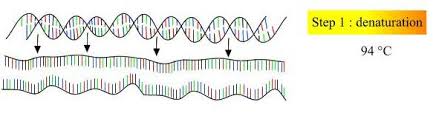
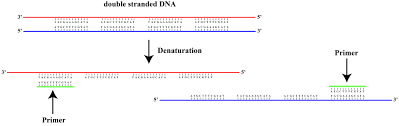
Denaturation

  • Temperature :92°C - 94°C
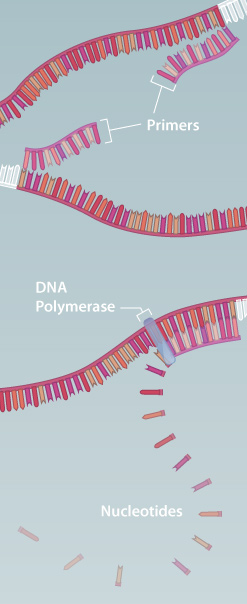
  • Double stranded DNA melt to single stranded DNA by breaking down the hydrogen bond
  • High temperature will denatured the DNA where the hydrogen bond between two complementary strand of DNA melt.


Annealing


  • Temperature: 50°C - 70°C 
  • Primer base pair with the complementary sequence in the DNA.
  • Hydrogen bond reformed.
  • Each pair of primer will have a particular annealing temperature determined by the length of the primer and their G+C content.


Extension


  • Temperature: 72°C 
  • DNA Polymerase bind to the annealed primer and extend the DNA at 3' end of DNA chain by adding nucleotides into the primer.


The basic components

    • Template DNA- contain the sequence of
    • DNA to amplify
    • Taq Polymerase- enzyme that make a new strand of DNA through the sequential addition of nucleotides.
    • Primer- typically 20-30 basses in size, a small segment of single strand DNA
    • Deoxynucleoside Triphosphate (dNTPs)


    Factors Of Optimal PCR

    PCR primer

    • Correctly design pair of primers is required.
    • Primer dimer, hairpin formation should be prevented.
    • Length of the primer.

    DNA Polymerase

    • Thermus aquaticus at 170°F 
    • Taq Polymerase is heat resistant 
    • Lack of proof reading exonucleases activity

    Melting Temperature

    • Temperature at which two strand of duplate dissociated.

    G/C Content

    • A primer should have a near randomic of nucleotide, 50% GC content.
    • Their should be no polyG or polyC stretches that can promote non specific annealing.

    Annealing Temperature

    • Use at below 5°C
    • At low annealing temperature, both primer will anneal to sequence other than true target of DNA


    HISTORY

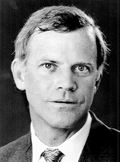
    The Polymerase Chain Reaction (PCR) technique was invented by Kary B. Mullis in 1985 while working as a chemist at Cetus Corporation, a biotechnology firm in Emenyville, California.


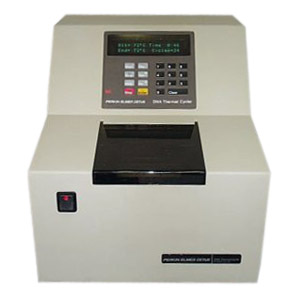
    When PCR was completed manually, MUlli's PCR techniques was slow and labor-intensive. Therefore, Cetus scientist began looking for ways in which automate the process. At first, thermostable Taq enzyme was not discoverd. That moment, scientist needed to add fresh enzyme to each cycle. Cetus engineers developed the first thermocycling machine, called "Mr. Cycle" to address that need to add fresh enzyme to each test tube after heating and cooling process. 

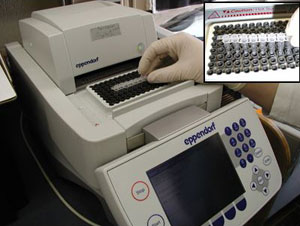
    Then, the purification of Taq Polymerase resulted in the need for machine to cycle more rapidly among different temperatue. In 1985, the Cetus formed a joint venture with Perkin-Elmer Corporation in Norwalk, Connecticut and they introduced the DNA Thermal Cycler.